
Case Study: Sriggle ERP (Signature ERP) – Building a Scalable Travel Operations Backbone
1. Product Vision
Sriggle ERP (Signature ERP) was envisioned as a complete operational backbone for travel businesses, designed to unify fragmented processes across sales, reservations, finance, supplier management, and reporting into a single, structured system. The goal was not just to digitize operations but to create a platform that enables predictable execution, financial accuracy, and operational scalability.
In most travel organizations, different departments operate in silos, using disconnected tools and manual processes. This results in data inconsistencies, delays in execution, and lack of visibility into business performance. Sriggle ERP was conceptualized to eliminate these inefficiencies by building a system where every action—from lead creation to financial reporting—is interconnected and traceable.
The vision was to create a platform that supports both B2B and B2C operations, enabling travel companies to manage complex workflows while maintaining control over pricing, inventory, and financial outcomes.
2. Problem Discovery (Operational & System Gaps)
Before development, a detailed analysis of existing travel operations revealed several critical gaps. Most organizations were relying on a combination of CRM tools, accounting software, Excel sheets, and manual communication channels. This fragmented setup created multiple issues, including duplication of data, inconsistencies in pricing, delays in booking confirmations, and lack of accountability across teams.
Financial processes were particularly problematic, with revenue and cost tracking often disconnected from actual bookings. This led to inaccurate reporting and challenges in reconciliation. Additionally, there was limited control over supplier contracts, inventory allocation, and commission structures, resulting in revenue leakage and operational inefficiencies.
From a system perspective, the absence of structured workflows meant that teams were forced to interpret requirements differently, leading to inconsistencies in execution. These insights made it clear that the solution required more than just automation—it required structured workflows, clear dependencies, and strong governance mechanisms.
3. Product Structuring (Before Design & Development)
Before initiating design or development, the system was broken down into clearly defined modules and workflows. Core modules included sales management, reservation handling, supplier and inventory management, financial accounting, reporting, and configuration settings. Each module was designed with clear input-output relationships and dependencies to ensure consistency across the system.
A key focus was on defining end-to-end workflows that connect all modules seamlessly. For example, a booking created in the sales module automatically impacts inventory allocation, financial entries, and reporting dashboards. This ensured that the system behaves as a single unified platform rather than a collection of independent tools.
Special attention was given to defining role-based workflows, ensuring that each user interacts with the system based on their responsibilities. This approach improved accountability and reduced errors caused by unauthorized or incorrect actions.
4. UX & Figma Design (System Experience Layer)
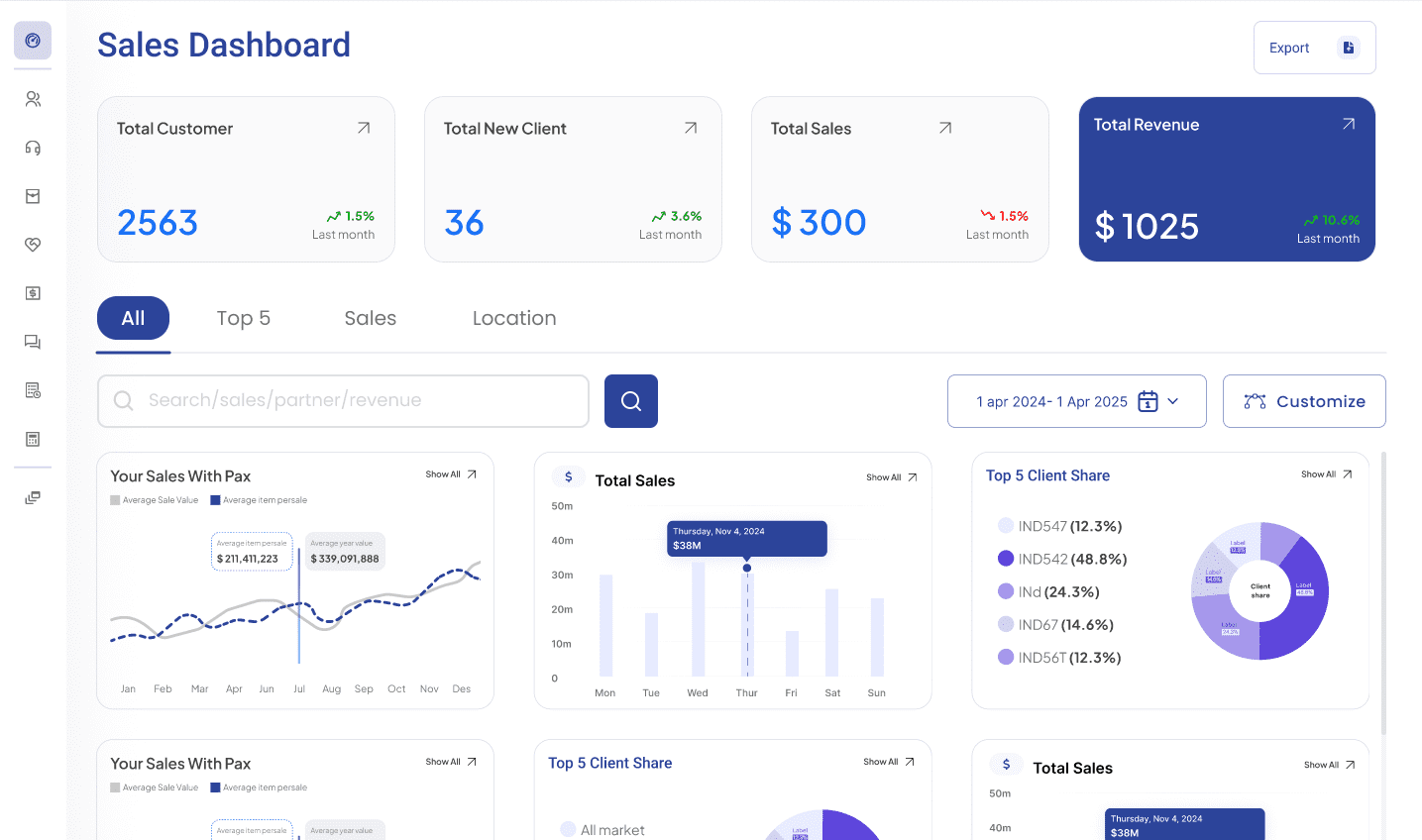
The design phase focused on creating a user experience that balances complexity with usability. Since ERP systems inherently involve complex workflows, the challenge was to present information in a structured and intuitive manner. The dashboard was designed to provide a high-level overview of key metrics such as bookings, revenue, and operational status, enabling users to make quick decisions.
Each module was designed with a clear navigation structure, ensuring that users can easily move between tasks without confusion. Forms and data entry screens were optimized to reduce manual effort while maintaining accuracy. Visual indicators such as status tags, alerts, and progress indicators were used to improve clarity and reduce dependency on training.
The design also ensured that the system is scalable, allowing new modules and features to be added without disrupting existing workflows. This modular design approach was critical for supporting long-term growth and adaptability.
5. Development Phase (System Execution & Architecture)
The development phase followed a modular and API-driven architecture to ensure scalability, flexibility, and performance. The backend was designed to handle complex business logic, including pricing calculations, inventory management, and financial transactions. The frontend was built to provide a responsive and user-friendly interface, enabling efficient interaction with the system.
Integration capabilities were a key focus, allowing the ERP to connect with external systems such as booking engines, payment gateways, and third-party APIs. This ensured that the platform can operate within a larger ecosystem without limitations.
Performance optimization was also a priority, with efficient data handling and caching mechanisms ensuring that the system remains responsive even under high workloads. Security measures were implemented to protect sensitive financial and customer data, ensuring compliance with industry standards.
6. Testing Phase (End-to-End Validation)
Testing was conducted with a strong emphasis on real-world scenarios rather than isolated feature validation. Complete workflows were tested end-to-end to ensure that the system behaves as expected across different modules. This included scenarios such as booking creation, modification, cancellation, and financial reconciliation.
Edge cases such as partial payments, supplier changes, and data inconsistencies were thoroughly tested to ensure system stability. User acceptance testing was conducted with actual business use cases, ensuring that the system aligns with operational requirements.
This approach significantly reduced post-deployment issues and ensured that the system is ready for real-world usage.
7. Go-Live Strategy
The go-live strategy was designed to minimize risk and ensure a smooth transition from legacy systems. A phased approach was followed, starting with internal testing environments, followed by controlled UAT, and gradually moving to full production deployment.
Data migration was carefully managed to ensure accuracy and consistency. Training sessions were conducted to help users adapt to the new system, reducing resistance and improving adoption rates. Continuous monitoring during the initial stages ensured that any issues were identified and resolved quickly.
8. Post-Launch Stabilization & Optimization
After deployment, the focus shifted to stabilizing the system and optimizing performance based on real-world usage. User behavior was monitored to identify areas of improvement, and feedback was collected to refine workflows and enhance usability.
Regular updates were implemented to address issues and introduce new features, ensuring that the system evolves with business needs. Performance optimization and system monitoring ensured that the platform remains reliable and efficient over time.
9. Key Features & Capabilities
Sriggle ERP offers a comprehensive set of features designed to streamline travel operations. The platform enables end-to-end booking management, from lead generation to final execution. Real-time dashboards provide visibility into business performance, while automation features reduce manual effort and improve efficiency.
The system includes robust financial management capabilities, allowing accurate tracking of revenue, expenses, and profitability. Supplier and inventory management features ensure better control over resources, while reporting tools provide actionable insights for decision-making.
Integration capabilities allow the platform to connect with external systems, ensuring flexibility and scalability.
10. Business Impact
The implementation of Sriggle ERP resulted in significant improvements in operational efficiency and business performance. Manual processes were replaced with automated workflows, reducing errors and saving time. Data became centralized, improving visibility and enabling better decision-making.
Financial accuracy improved significantly, with real-time tracking of revenue and costs ensuring better control over profitability. Team collaboration improved, with clear workflows and role-based access reducing confusion and increasing accountability.
The platform’s scalability allowed businesses to handle increased workload without compromising performance, supporting long-term growth.
11. Strategic Insight
The success of Sriggle ERP highlights the importance of structured workflows and system alignment. ERP systems are inherently complex, but their effectiveness depends on how well they are structured and implemented. By focusing on clarity, modular design, and real-world validation, the platform was able to deliver a solution that meets both operational and business needs.
Another key insight is the importance of integrating financial processes with operational workflows. This ensures that every transaction is accurately tracked and reflected in the system, reducing discrepancies and improving transparency.
12. Final Outcome
Sriggle ERP evolved into a powerful and scalable platform that serves as the backbone of travel business operations. It successfully integrates multiple functions into a single system, providing a unified view of business performance and enabling efficient execution of complex workflows.
The platform supports both current operational needs and future growth, making it a valuable asset for travel companies looking to scale their operations.
Conclusion
Sriggle ERP demonstrates that successful ERP implementation is not about adding features but about creating a structured system that aligns with real business workflows. By focusing on clarity, scalability, and usability, the platform was able to transform travel operations and deliver measurable business value.