
Kapil Modgill
About
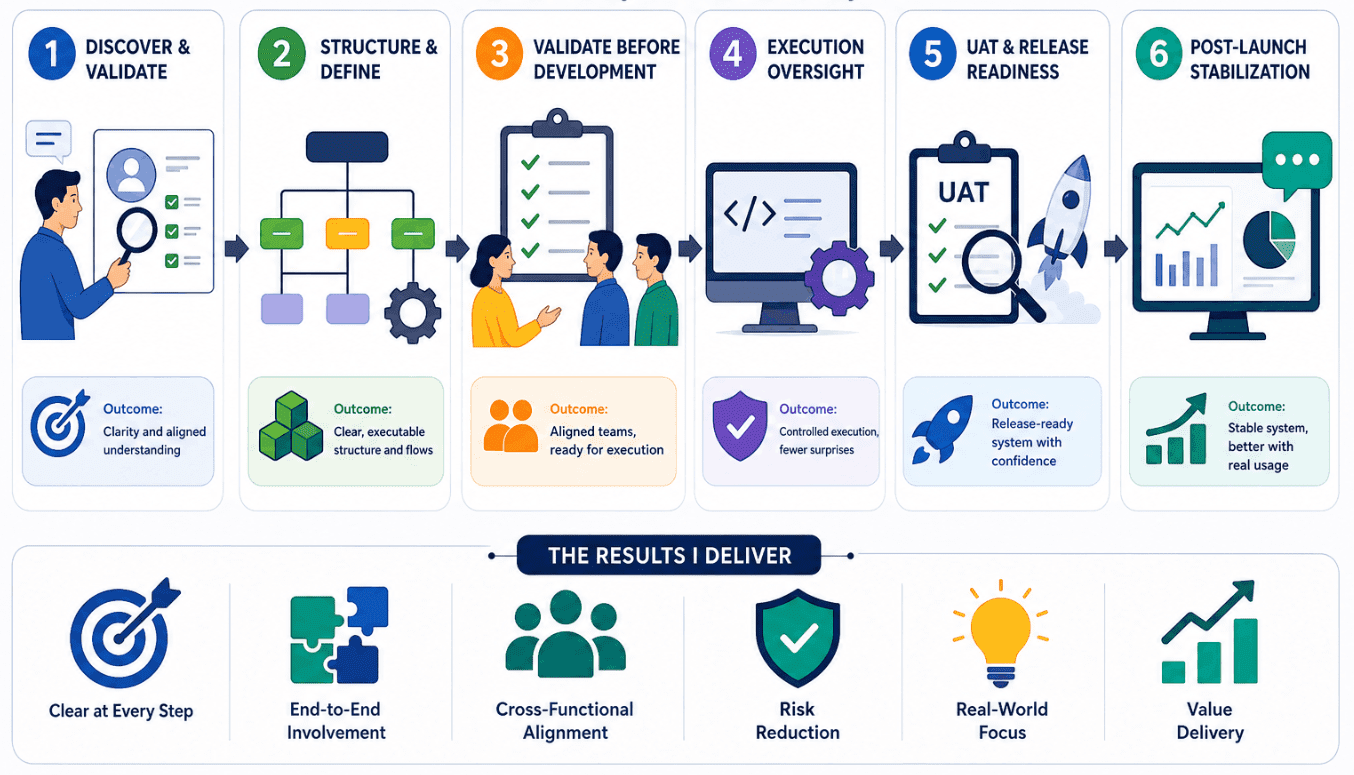
I work on software products from the point where ideas are still unclear to the stage where they are used by real users.
With 15+ years of experience, my role has evolved from design execution to owning how a product is structured, built, and delivered. I focus on defining systems in a way that reduces confusion during development and avoids rework later.
Most products fail not because of technology, but because the logic is not fully thought through before development starts. My approach is to solve that early—by converting business requirements into clear workflows, edge-case scenarios, and connected modules.
My Core Strength
I work across multiple layers of product development:
- Product thinking — understanding what should be built and why
- System design — defining how the product will function end-to-end
- UX clarity — ensuring usability and logical flow
- Execution — making sure the product is delivered properly
This combination allows me to connect business, design, and development, instead of working in silos.
About

About
Delhi NCR based Product Architect
Work Philosophy
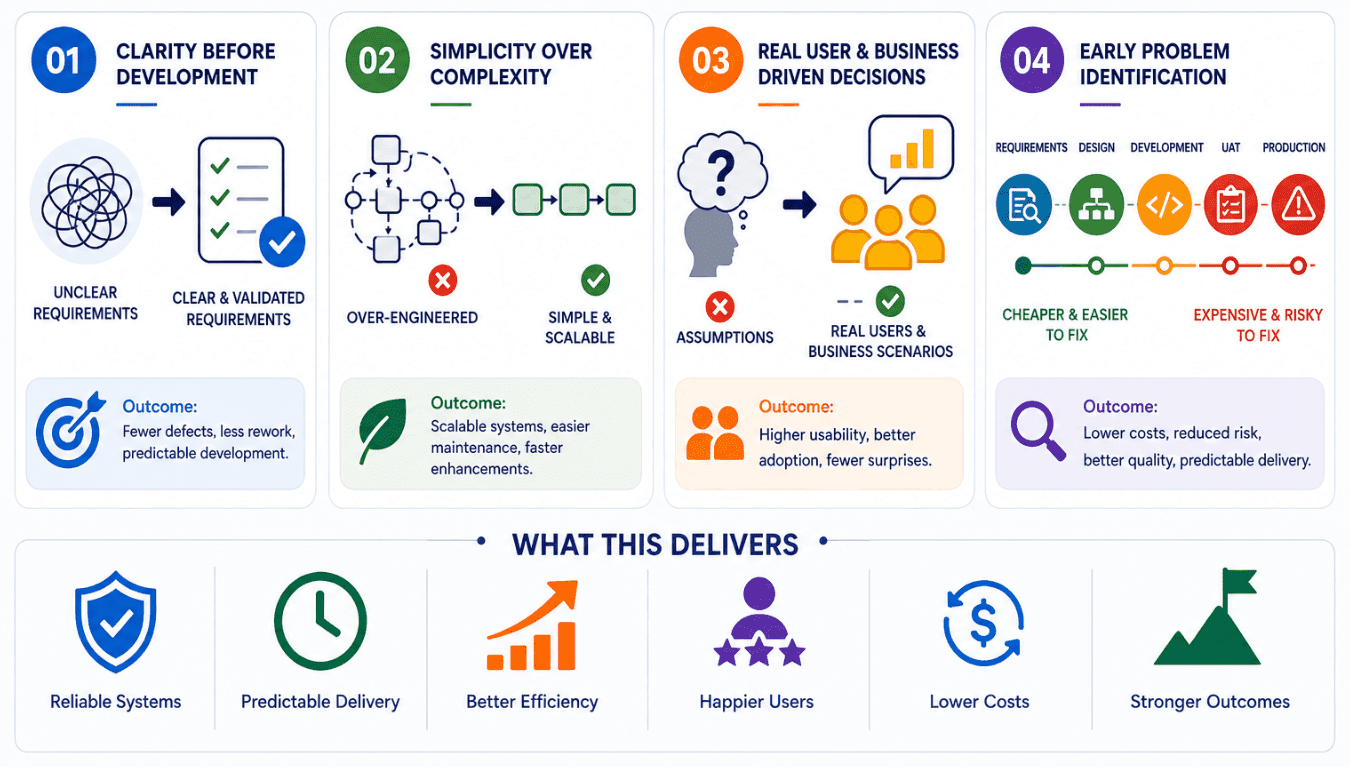
My approach is grounded in execution reality rather than theoretical best practices. I strongly believe that clarity before development eliminates a large percentage of downstream defects, rework, and delays. When requirements are well-structured and validated early, teams spend less time interpreting and more time executing effectively.
I prioritize simplicity in system design, as simple and well-defined flows are easier to scale, maintain, and debug. Over-engineered solutions may appear comprehensive but often introduce unnecessary complexity that slows down both development and future enhancements. A system that works reliably in real-world conditions is more valuable than a perfectly designed system that struggles during actual usage.
I also emphasize decision-making based on real user behavior and business scenarios rather than assumptions. Many product issues arise because systems are designed for ideal cases instead of practical usage patterns. By grounding decisions in actual workflows, the system becomes more resilient and usable.
Another key principle is early problem identification. Issues detected during requirement or design stages are significantly cheaper and faster to resolve compared to those discovered during UAT or after deployment. My focus is always on shifting problem discovery as early as possible in the lifecycle to reduce risk and improve delivery predictability.
Current Focus
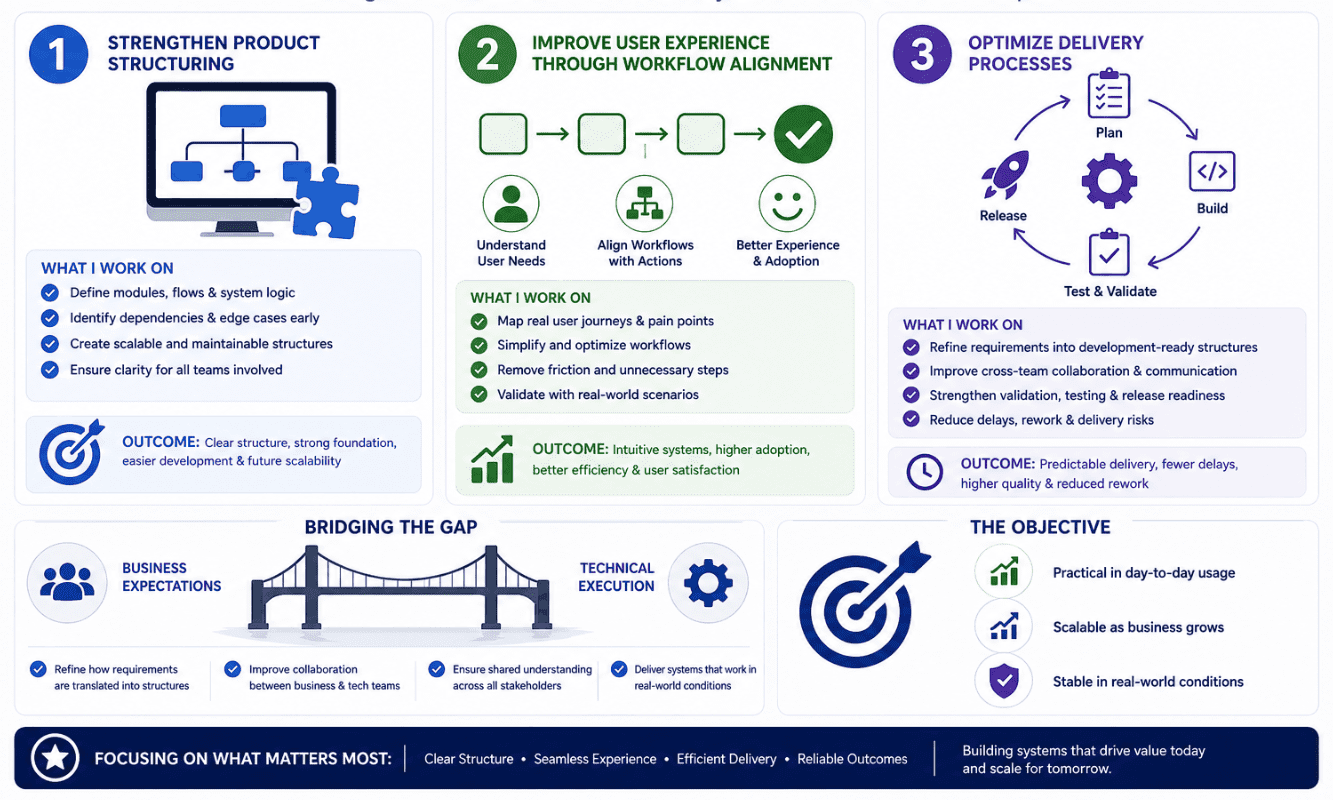
My current focus is on strengthening product structuring, improving user experience through better workflow alignment, and optimizing delivery processes to reduce delays and rework. I work on ensuring that systems are designed with clear logic, built with proper alignment, and validated against real-world usage conditions.
I am also focused on bridging the gap between business expectations and technical execution. This includes refining how requirements are translated into development-ready structures, improving collaboration between teams, and ensuring that systems are not only functionally complete but operationally effective.
The objective is to build systems that are practical in day-to-day usage, scalable as business needs grow, and stable enough to handle complex, real-world scenarios without frequent breakdowns.
Let’s Work Together
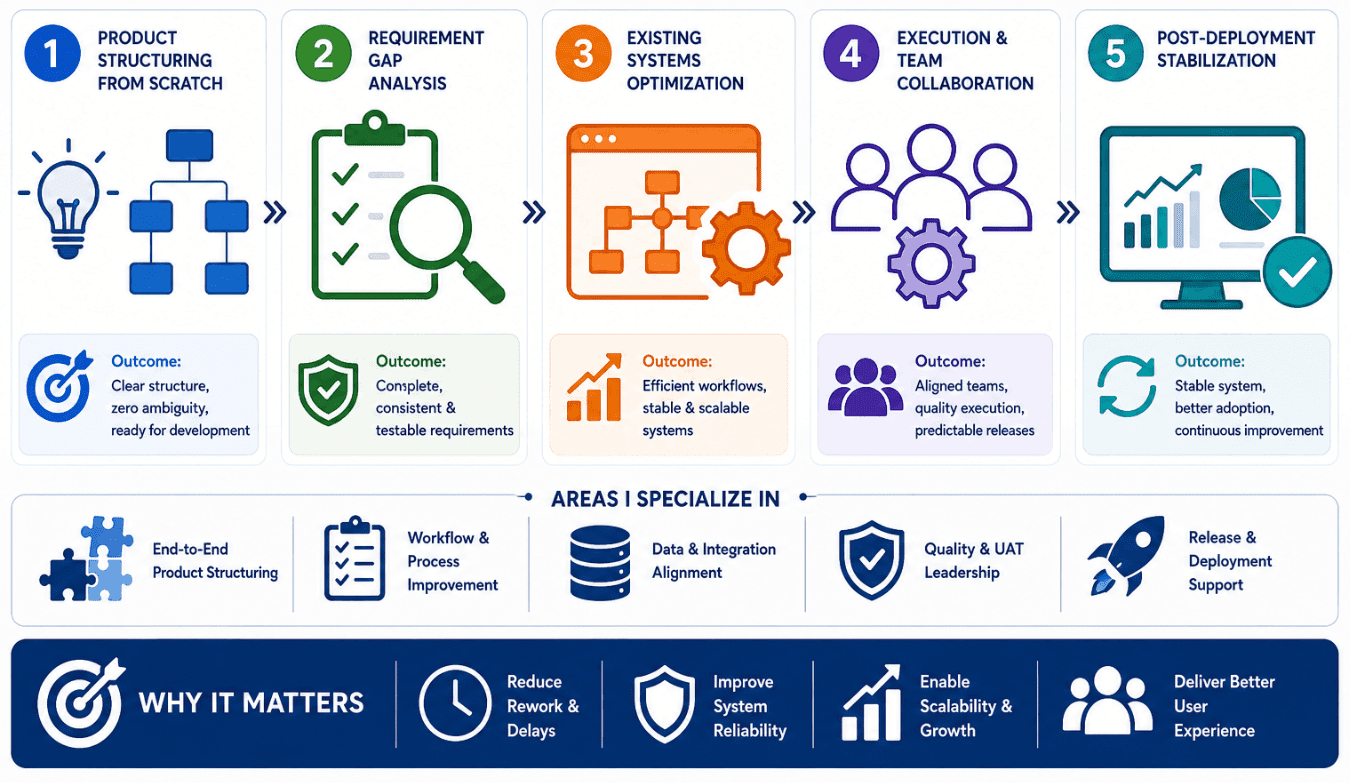
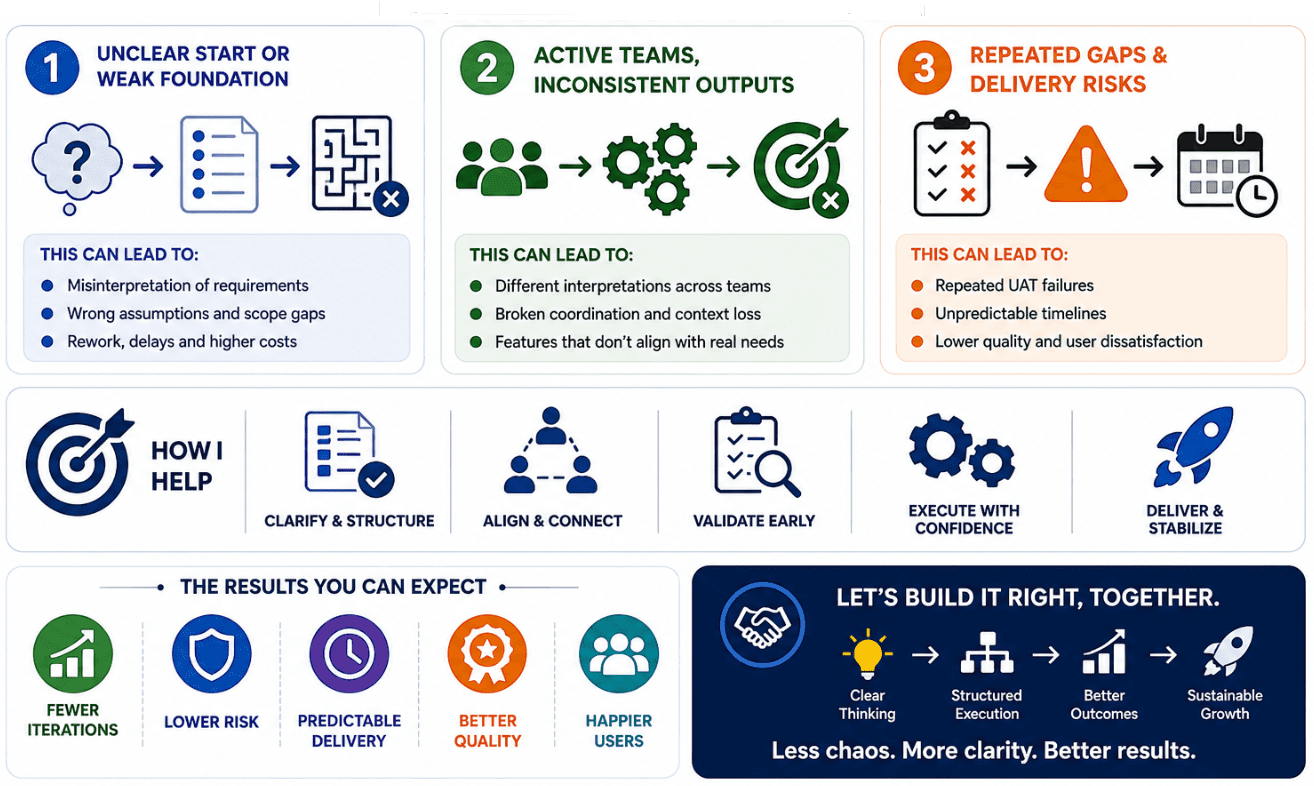
You may benefit from this approach if you are starting a product but lack clarity in requirements, flows, or system structure, or if your current documentation does not translate effectively into development. It is also relevant if your teams are working actively but outputs remain inconsistent due to misalignment or unclear dependencies.
If your UAT cycles repeatedly expose gaps, edge cases, or integration issues, it indicates that foundational clarity is missing. Similarly, if delivery timelines are slipping due to rework, changing requirements, or late-stage issue discovery, the problem is often rooted in early-stage structuring rather than execution capability.
I work on converting unclear or partially defined ideas into structured execution frameworks, ensuring that teams operate with clarity, dependencies are managed proactively, and delivery becomes more predictable. The goal is to reduce iterations, minimize risk, and enable systems to move from concept to stable production with greater efficiency.