
Case Study: Trazel CRM – End-to-End Product Design, Structuring & Delivery
1. Product Vision
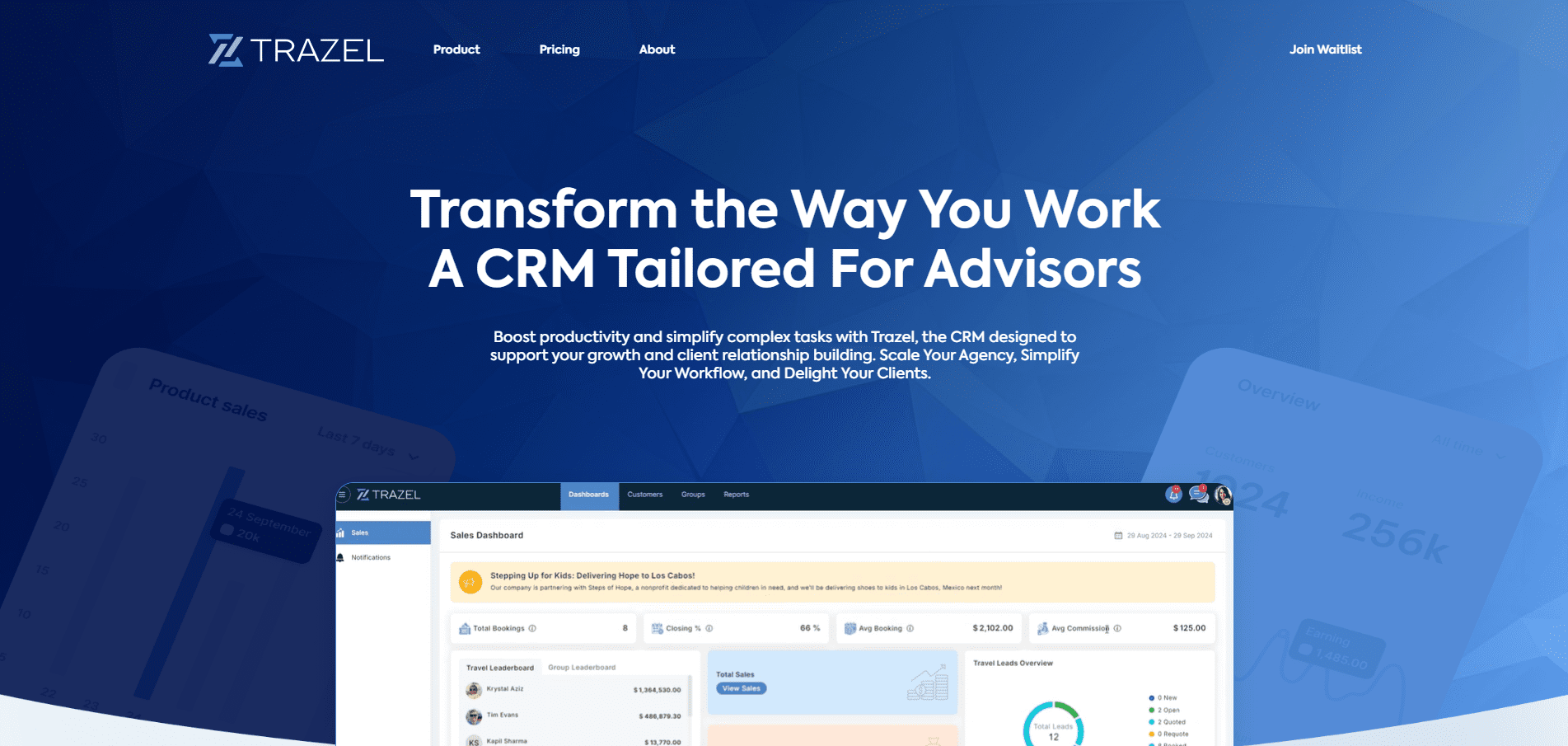
Trazel CRM was conceptualized to solve a fundamental gap in the travel industry, where agencies were not failing due to lack of tools but due to fragmented workflows, disconnected systems, and unclear execution layers. The vision was to create a centralized operating system that connects agents, customers, bookings, and financial processes into one unified platform. The goal was to design a system capable of handling both leisure and group travel workflows while enabling agencies to scale without operational chaos. Instead of building just another CRM, the focus was on creating a structured ecosystem that simplifies operations, improves visibility, and enhances customer experience.
2. Problem Discovery (Ground Reality)
Before development began, a deep analysis of real-world agency operations revealed significant inefficiencies. Most agencies relied on a combination of Excel sheets, emails, and messaging platforms to manage leads, quotes, and bookings. This resulted in missed follow-ups, inconsistent quoting, lack of centralized customer data, and poor coordination between team members. Group bookings were particularly challenging due to the absence of structured workflows, leading to delays and operational confusion. Additionally, there was no real-time visibility into sales pipelines or performance metrics, causing revenue leakage and inefficiencies. These insights clearly highlighted that the core issue was not the absence of tools but the absence of structured processes.
3. Product Structuring (Before Design)
Before initiating the design phase, the system was broken down into clearly defined modules and workflows to eliminate ambiguity. Core modules such as lead management, quoting, booking, payments, group management, communication automation, analytics, and agency-level configuration were identified and structured. A critical step in this phase was defining distinct workflows for leisure and group travel. Leisure flow followed a linear journey from lead to booking and feedback, while group flow required a more complex structure involving event creation, proposals, room blocks, and coordinated execution. Separating these flows ensured that the system could handle both simple and complex use cases effectively without creating confusion during development or usage.
4. Figma Design Phase (Product UX Structuring)
The Figma design phase focused on translating structured workflows into intuitive and scalable user interfaces. The Agent Portal was designed as the operational backbone of the system, including dashboards for pipeline visibility, lead management interfaces, dynamic quote builders, booking management screens, payment tracking modules, and analytics dashboards. The design emphasized minimal clicks, clear status indicators, and modular components to support scalability. Alongside this, the Customer Portal, also known as the Traveler Hub, was developed as a white-labeled interface where clients could access quotes, bookings, and updates in real time. This reduced dependency on agents for basic information and significantly improved transparency. Additionally, a robust agency-level admin panel was designed to manage roles, permissions, commissions, workflows, and branding. A subscription model was also integrated, allowing agencies to manage users, plans, and billing efficiently.
5. Development Phase (System Execution)
The development phase followed a modular and API-driven architecture to ensure scalability and flexibility. Each module was built as an independent yet interconnected component, allowing seamless data flow across the system. A dynamic quoting engine was developed to support multi-destination itineraries with real-time cost calculations and margin control. The group management engine handled complex event scenarios, including room allocations and coordinated bookings. Automation systems were implemented to handle repetitive tasks such as follow-ups, reminders, and notifications. Integration layers were developed to connect external travel data sources like hotel and flight APIs, ensuring that all quotes and itineraries were accurate and up to date. The focus during development was to maintain alignment with defined workflows and avoid deviations that could lead to inconsistencies.
6. Testing Phase (Critical Success Factor)
Testing played a crucial role in ensuring the system’s reliability and usability. Instead of traditional feature-based testing, a flow-based testing approach was adopted to validate complete user journeys. End-to-end scenarios for both leisure and group bookings were tested thoroughly to ensure real-world applicability. Edge cases such as partial payments, multi-user edits, and data conflicts were carefully evaluated. User Acceptance Testing (UAT) was conducted using actual business scenarios with multiple stakeholders, ensuring that the system behaved as expected in practical situations. This approach significantly reduced post-release issues and ensured that the system was stable before going live.
7. Go-Live Strategy
The go-live strategy was designed to minimize risk and ensure smooth adoption. A phased deployment approach was followed, starting with internal testing environments, followed by controlled UAT releases, limited production rollout, and finally full-scale deployment. The primary focus during this phase was stability rather than speed. Real-time monitoring was implemented to track system performance and identify issues early. This structured approach ensured that the transition from development to production was seamless and did not disrupt ongoing operations.
8. Post-Launch Stabilization
After deployment, the focus shifted to system stabilization and continuous improvement. Early user behavior was closely monitored to identify gaps that were not visible during testing. Feedback from agents and agencies was collected and analyzed to refine workflows and improve usability. Quick iterations were implemented to address issues and enhance performance. This phase ensured that the system adapted to real-world usage and became more efficient over time, leading to higher adoption rates and reduced dependency on support.
9. Core Features (Refined & Structured)
Trazel CRM introduced several key features designed to address industry-specific challenges. The Traveler Hub provided a centralized platform for clients to access quotes, bookings, and updates, improving transparency and reducing communication overhead. The dynamic quoting system enabled agents to create complex itineraries quickly with real-time cost tracking, significantly improving conversion rates. Group management tools simplified event handling, including room block coordination and group invoicing, making it easier to manage large-scale bookings. Automation features ensured that repetitive tasks such as follow-ups and reminders were handled efficiently, reducing manual workload. The analytics dashboard provided real-time insights into revenue, performance, and booking trends, enabling data-driven decision-making. Integration with real-time travel data sources ensured accuracy and reliability across all operations.
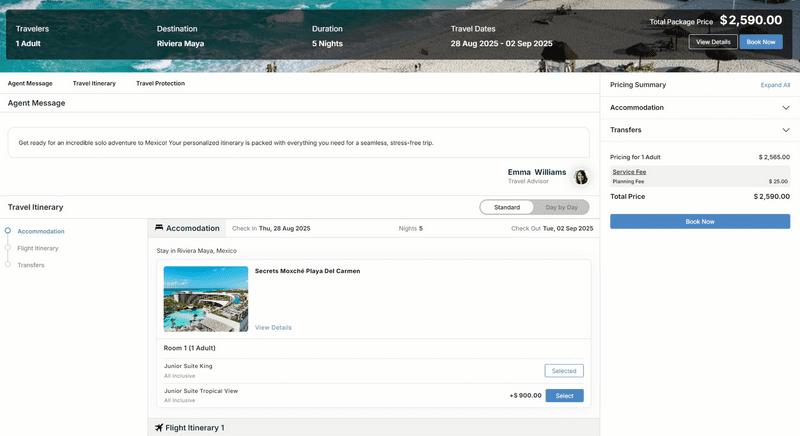
Simplify Your Quoting Process
Create tailored, dynamic itineraries for complex travel bookings, including multi-destination trips and group proposals. With real-time cost tracking and automated updates, Trazel ensures that you deliver accurate and detailed quotes every time.
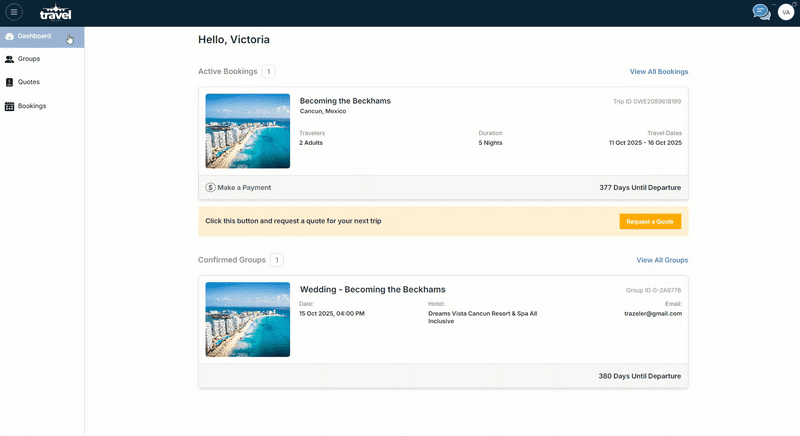
Keep Clients Informed and Engaged
The Traveler Hub is your clients' one-stop portal for accessing active quotes, booking details, and group updates. Fully branded with your agency’s identity, this centralized platform ensures your clients are always connected to the latest information, while freeing your team to focus on delivering exceptional service.
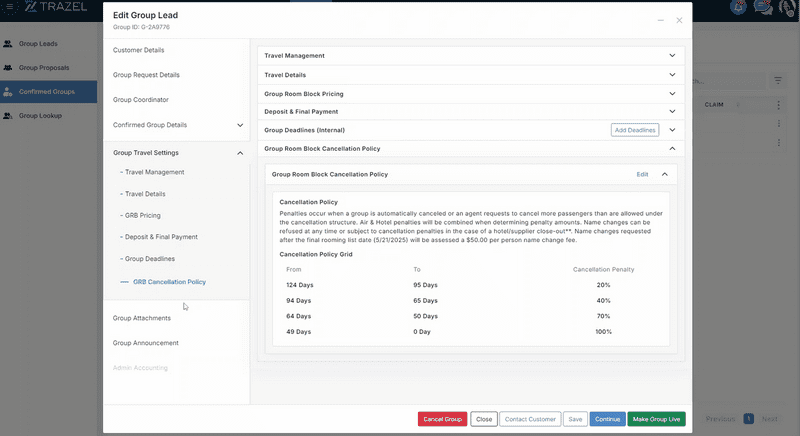
Manage Groups of Any Size
Streamline group booking logistics with Trazel’s event management tools. From room block coordination to group invoicing and customizable event websites, you can manage everything in one place, ensuring smooth operations for large events or corporate groups.
Stay Connected Without the Extra Work
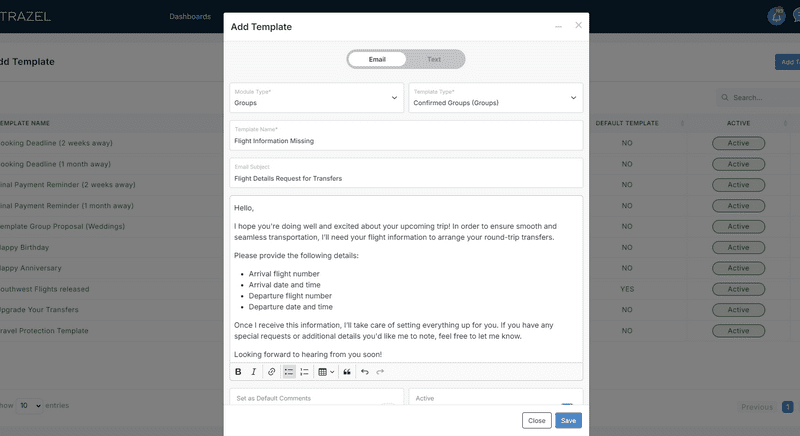
Automate repetitive tasks like sending booking reminders, payment notices, and trip updates. Personalize every communication with preloaded templates that allow for consistency, while freeing up your time to focus on client service.
10. Business Impact
The implementation of Trazel CRM resulted in significant improvements across multiple areas. Quote creation time was reduced from hours to minutes, enabling faster response to clients. Follow-up processes became automated, eliminating missed opportunities. Data became centralized, improving visibility and reducing errors. Group bookings, which were previously complex and unstructured, became streamlined and manageable. Real-time analytics provided better control over operations and performance. Overall, the system improved efficiency, reduced manual effort, and increased customer satisfaction.
11. Strategic Insight
The success of Trazel CRM highlights an important principle: the effectiveness of a system depends more on structured workflows than on the number of features. By clearly defining processes before development, separating complex flows like leisure and group bookings, and validating the system using real-world scenarios, Trazel was able to deliver a stable and scalable solution. The focus on agency-level control and scenario-driven testing further ensured that the system aligned with actual business needs rather than theoretical assumptions.
12. Final Outcome
Trazel CRM evolved into a comprehensive operational platform for travel agencies, supporting everything from individual agents to large-scale organizations. It provided a structured approach to managing leads, quotes, bookings, and customer interactions while enabling scalability and efficiency. The system successfully bridged the gap between business requirements and technical execution, resulting in a reliable, user-friendly, and high-performing CRM tailored for the travel industry.
Conclusion
Trazel CRM demonstrates that successful product development is not driven by features alone but by the clarity of workflows and alignment between design, development, and real-world usage. By focusing on structured execution, early validation, and continuous improvement, the platform was able to transform how travel agencies operate, making them more efficient, scalable, and customer-focused.